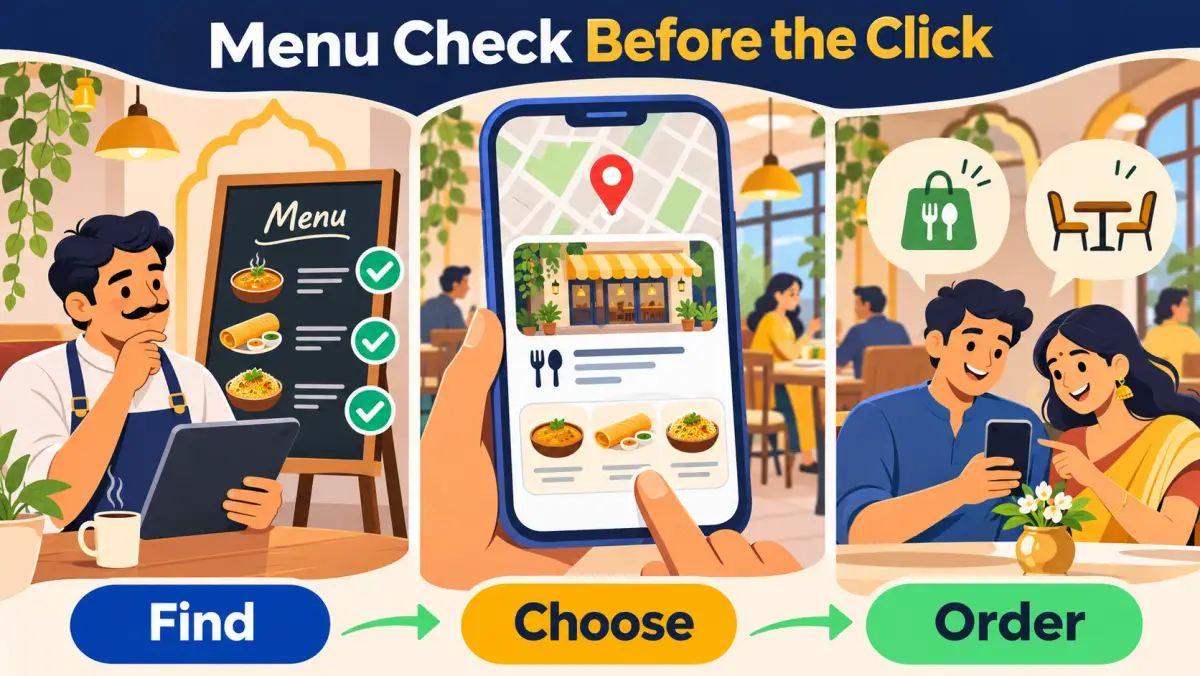
Quick answer: a restaurant's local listing needs to help someone decide: what can I eat, is it available now, and can I order, reserve, or get there without a second search?
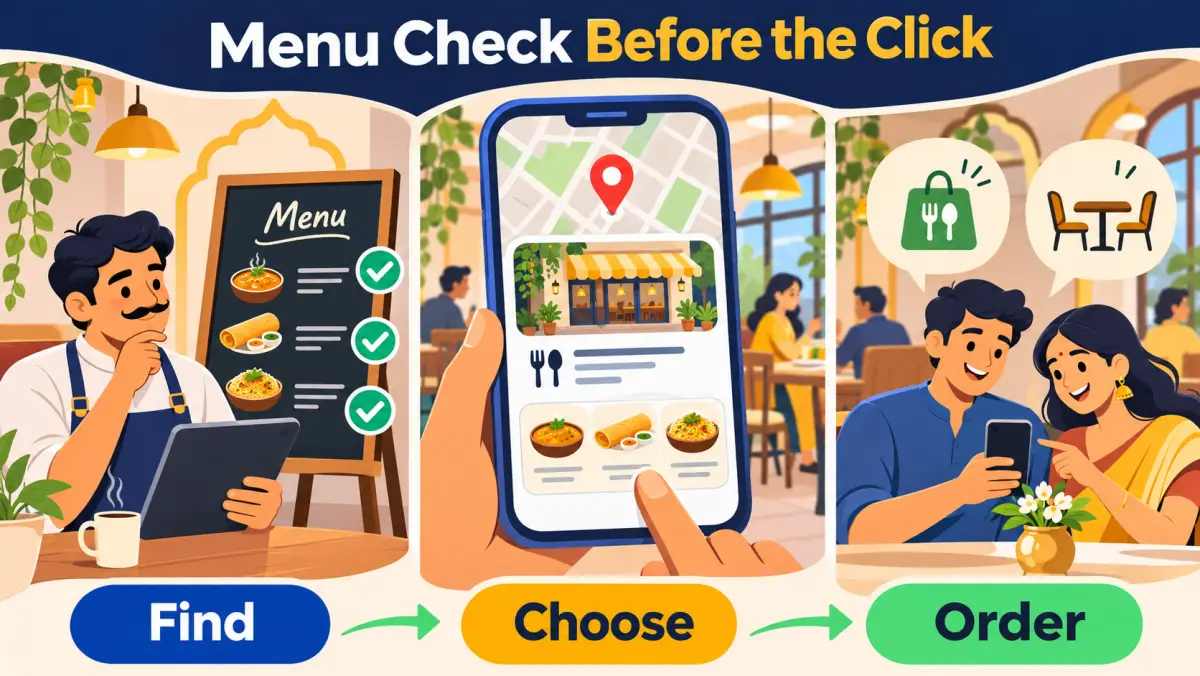
Follow the customer's three-step dinner decision
Design the Profile for the next decision, not a vanity metric. Google's restaurant Profile guide groups restaurant management around food access, details, menu content, customer engagement, and performance.
Make the menu complete before making it clever
A few popular dishes are not a full menu. Google's representation guidelines say menus should represent the available items and that menu URLs cannot be direct links to third-party ordering or delivery services.
Use AI transcription as a draft, then check every dish
Publish without checking
- A discontinued dish is still visible.
- A price or spelling is copied incorrectly.
- A customer discovers the mismatch at the table.
Owner-checked menu
- Every listed dish is currently available.
- Prices and descriptions match the kitchen's menu.
- Sections make the menu easy to scan on a phone.
Let AI reduce typing, not remove accountability. Google's menu-editor guidance describes an experimental feature that can turn a menu photo or PDF into a detailed menu; it specifically tells the business to review it for accuracy before publishing.
Keep the order and booking path honest
Tap every action like a customer
- Menu: it opens on a phone and matches the current kitchen list.
- Order: the collection or delivery route is still available.
- Reserve: staff can honour the slot or waitlist.
Fix the broken action before making another promotional post.
Keep the customer action current. Google's online-ordering guidance explains that restaurants can manage custom links, third-party providers, and preferred ordering options on the Profile.
Turn competitor automation into a small kitchen-owned routine
Automation is useful when it supports this rhythm. Dhanda AI promotes Business Profile analysis and AI social posts, while Web Sarathi promotes restaurant menu and Profile guidance. The restaurant still owns the real menu and customer experience. See Dhanda AI and Web Sarathi's restaurant guide for their current positioning.
End the visit with a fair feedback option
Ask once, without pressure: “Thanks for dining with us. If you'd like, a Google review helps nearby diners find us.”
Do not exchange rewards for reviews. Google's review-link guidance permits sharing a link or QR code and prohibits incentives. Use our restaurant review guide for practical placement after the meal.
Where ReviewPro fits: use ReviewPro Online Ordering for a direct catalogue and order flow, then keep the public menu and customer actions aligned. Review the wider Business Profile audit each month so the listing stays as dependable as the kitchen.